
A small home can have an architectural presence that exceeds its floor area. We sense it in a clear view through a doorway, a cabinet that fits its wall properly or a window treatment that gives the room a generous vertical line. These details make the interior feel resolved. They tell us that the space has been understood, rather than simply filled.
Small home design becomes more interesting when the ambition shifts towards order, proportion and character. A compact apartment does not need a collection of miniature furniture or a complicated set of visual tricks. It needs a few strong decisions about how its surfaces, openings and daily activities relate to one another. Those decisions can make even an ordinary floor plan feel more deliberate.
Architectural character also need not arrive through major renovation. Paint, furniture placement, lighting and carefully scaled storage can establish much of it. The useful starting point is to look at the home as a sequence of spaces, then decide what should be continuous, what deserves emphasis and where practical life needs a better place to happen.
Begin with the view through the home
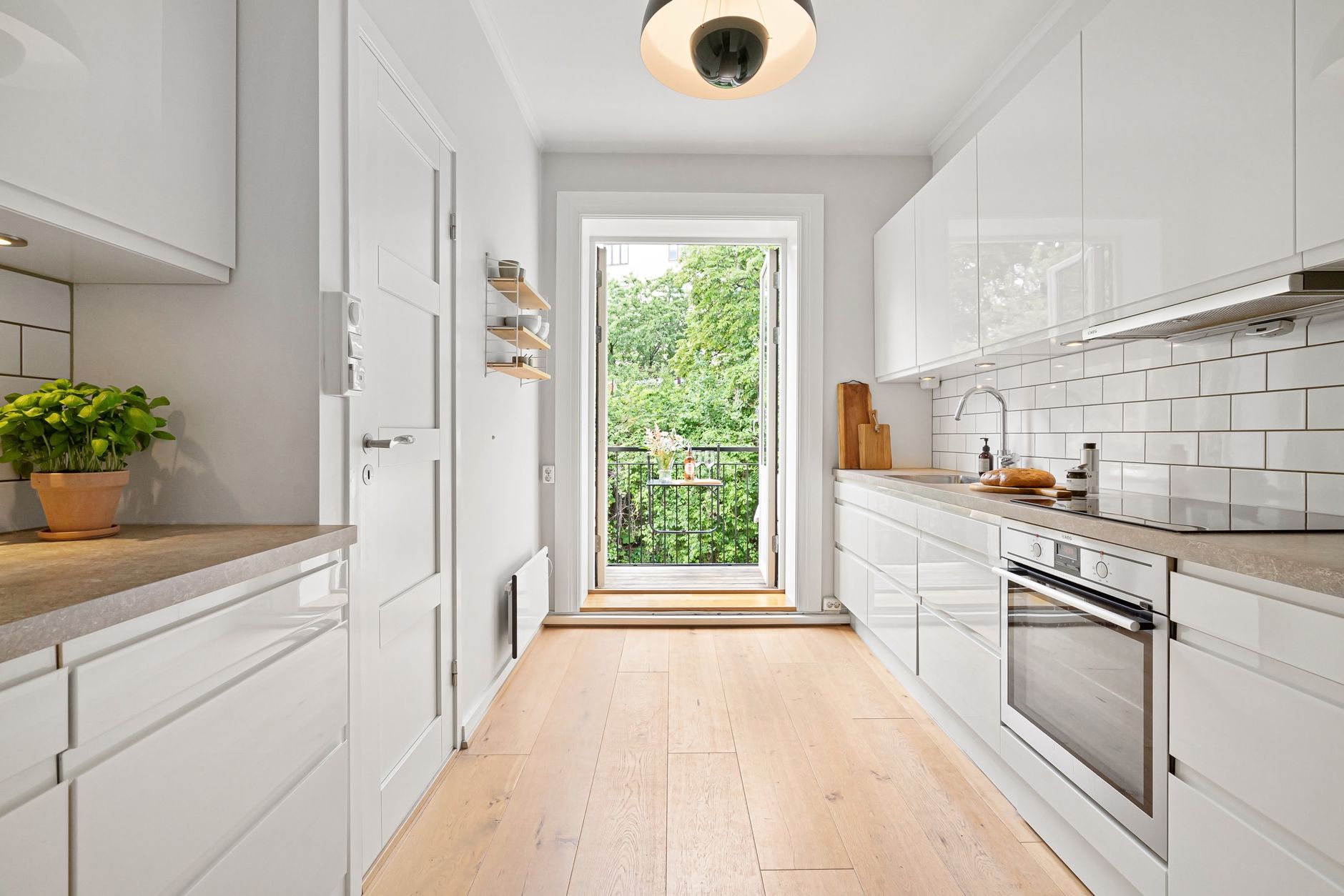
Stand at the entrance and identify the longest useful sightline. It may end at a window, a wall suitable for art or the back of an adjoining room. Preserve enough of that view for the eye to travel. A tall freestanding unit in the wrong place can interrupt the sense of depth, even when there is physically enough room to walk around it.
Move through the home and repeat the exercise at each doorway. Look for pieces that create an accidental obstacle or a cluttered endpoint. A low cabinet can sometimes provide the same storage with a calmer visual effect. Elsewhere, a tall unit placed against an appropriate wall can make a room feel more ordered than several smaller pieces scattered around it.
Mirrors can extend a worthwhile view, provided the reflection deserves repeating. Check the image from seated and standing positions before hanging one. Our guide to decorating with mirrors offers useful ways to assess light and depth. Reflect a window or a considered wall, rather than doubling the most crowded corner of the room.
Give each wall a clearer role
In a small home, every wall is close enough to register. A wall carrying a doorway, television, shelves and several unrelated pictures can feel particularly busy. Decide which task matters most, then organise the others around it. One coherent run of storage usually reads more calmly than a collection of pieces with different depths and heights.
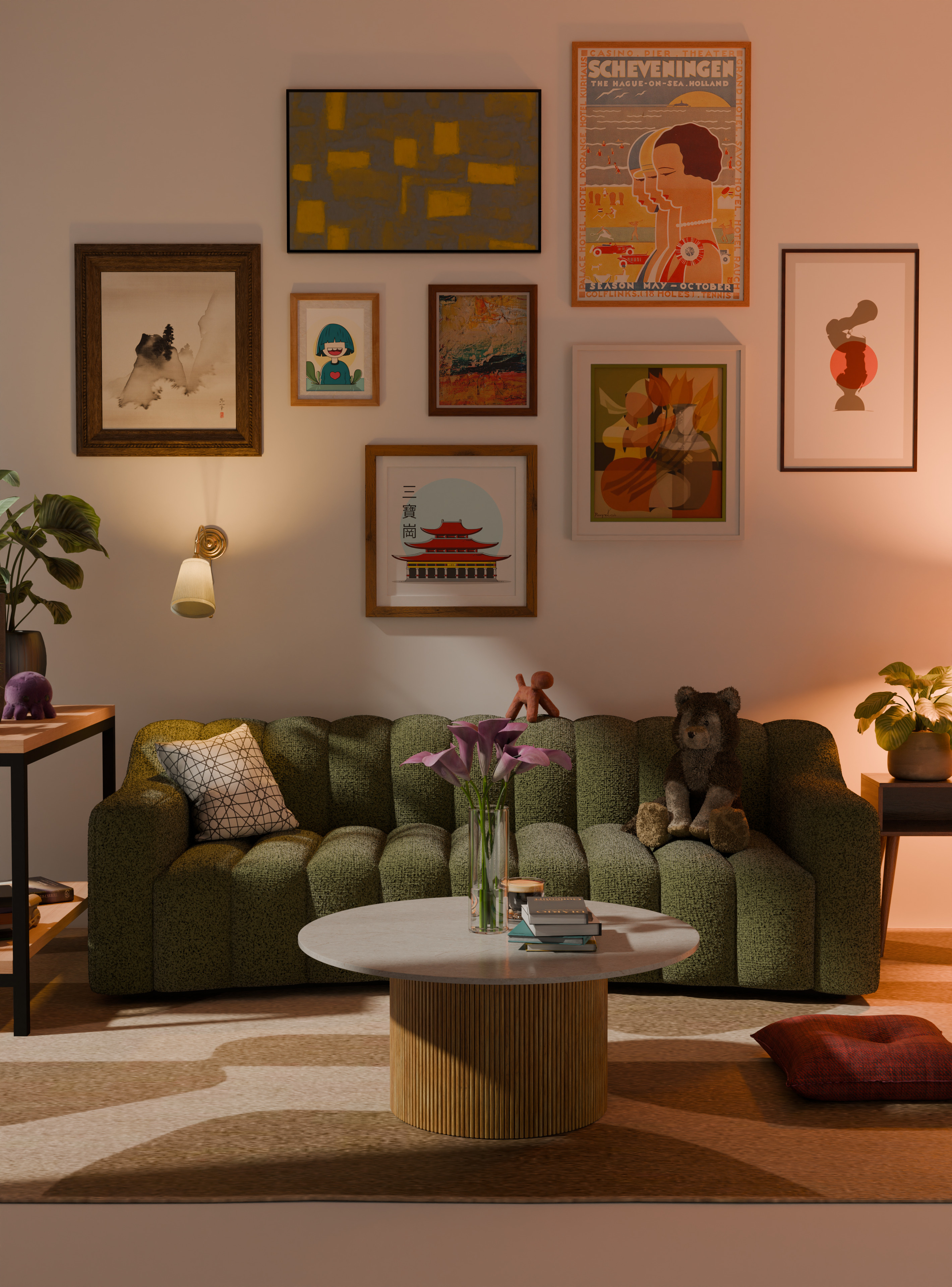
Use alignments that the eye can recognise. The top of a cabinet might relate to a nearby window sill; a group of art can sit within a defined area rather than spreading towards every corner. These relationships need not be rigidly symmetrical. They simply give the wall a structure, allowing ordinary objects to feel as though they belong.
Create one generous gesture
A substantial piece of art, a full-height curtain or a cabinet sized to its wall can give the room more presence than numerous small decorative additions. The gesture should still serve the space. A large painting is useful where its scale gives a blank wall focus; a massive mirror is less helpful if it reflects an awkward arrangement and obstructs furniture below.
Look at the entire wall in a photograph. If too many small elements compete for attention, remove some temporarily and assess the result. Architectural order often appears through subtraction. The room gains a clearer hierarchy without requiring another layer of trim or decorative detail.

Use joinery to resolve a real problem
Built-in storage can turn an awkward recess into a defining feature. It can absorb a change in depth, integrate a desk or create a place for coats near the entrance. Its strongest contribution is the way it resolves a specific condition. Bespoke cabinetry designed only to imitate a photograph can be expensive while leaving the home’s practical needs unanswered.
Measure what the storage must hold before designing its fronts. A cupboard for cleaning equipment needs different internal proportions from one for folded linen. A living-room cabinet may need ventilation and cable access for equipment. Plan these details with the maker so the clean appearance rests on a useful interior, rather than concealing a difficult one.
Not every wall needs bespoke joinery. A well-chosen freestanding cabinet can offer flexibility, particularly in a rental or a home likely to change. Keep its silhouette simple enough to sit comfortably with the architecture and ensure it has the necessary stability and fixing arrangements. The appearance of permanence should never come at the expense of practical installation.
Balance closed storage with selective display
Closed cupboards provide a quieter background for small rooms with many daily objects. A limited open shelf can then give books or ceramics a more meaningful role. Our guide to styling open shelving is useful for assessing that balance. The display should work at the room’s actual viewing distance, where too many small objects can become a band of visual noise.
A painted cabinet in the wall colour can make the storage feel continuous with the room. A contrasting timber finish can instead give it the character of furniture. Choose which effect serves the space. The distinction is especially noticeable where the cabinet occupies a large portion of a small room’s visual field.
Make material continuity do some of the work
Several abrupt flooring changes can fragment a compact home. Where the existing construction and room use allow, a more continuous floor treatment gives the eye fewer boundaries to negotiate. This is a design principle, not a reason to overlook the performance needs of wet areas or remove a sound historic floor. Examine the practical conditions before specifying a change.
Continuity can also come from related colours and finishes when replacing floors is unnecessary. A rug that sits comfortably with the timber beneath it, curtains related to the wall colour and restrained door finishes can connect the sequence of rooms. The materials need enough distinction to remain interesting, but they need not each introduce a new palette.
Use one or two tactile materials prominently rather than a catalogue of competing effects. Timber and a softly textured painted wall can create a convincing base. An occasional stone surface or a woven textile adds another note. In a small space, each material occupies a substantial part of the experience, so its quality and placement deserve attention.
Colour can strengthen the room’s proportions
Colour is capable of making joinery, walls and doors feel like a continuous envelope. Painting related surfaces in one tone can reduce the visual interruptions around a compact room. A contrasting trim does the opposite, drawing attention to openings and edges. Decide whether you want the architecture to recede or become more defined before selecting the paint treatment.
A deep colour can work in a small room when the aim is intimacy and a clear atmosphere. Pale colour can feel spacious when it has enough daylight and material contrast. Neither choice guarantees the result. Our comparison of colour drenching and colour capping offers a useful way to think about how the ceiling participates in the room.
Consider the adjacent spaces at the same time. A hallway and living room can share an undertone even if their paint depths differ. View sample boards through the actual doorway, including the floor that links the two. A colour relationship that makes sense across the threshold gives the home more coherence than selecting each room independently.

Let windows give the room a vertical structure
Curtains are one of the most effective ways to make a plain room feel more considered. A treatment that relates to the wall’s height can establish a generous vertical line, while enough fabric gives the window a convincing frame. Position the hardware in relation to the opening, ceiling and any existing cornice. Hanging everything at the highest possible point is not automatically the right answer.
Allow the curtains to operate properly. Decide where the fabric stacks when open and whether it blocks a door, radiator or ventilation outlet. Sheers can filter light, while a separate lining or blind may be needed for privacy and sleep.
The view beyond the window also matters. Keep a beautiful outlook legible where possible and arrange furniture to benefit from it. If the view is less appealing, a softly filtered treatment can give the room light without making the exterior its focal point. Architecture is partly the way an interior chooses to meet what lies outside it.
Define activities without building unnecessary barriers
A small open-plan home often needs to accommodate eating, working and relaxing within one view. Define those activities through furniture and light before adding partitions. A dining table with a pendant, a seating group on a rug and a desk placed within a recess can each have a clear identity while the overall space remains connected.
Position the furniture so its boundaries make sense. The back of a sofa can describe a seating area, but it should not create a cramped passage or face the entrance awkwardly. A shelving unit used as a divider may add storage while also reducing daylight. Compare those effects with the benefit of the separation you want to create.
In the kitchen, resist adding an island merely because the plan seems unfinished without one. Adequate worktop, storage and comfortable movement are better measures. Our article on maximising a small kitchen can help establish those priorities. A well-positioned table may serve the household more effectively than an island that compresses every route around it.
Furniture should have presence without occupying every gap
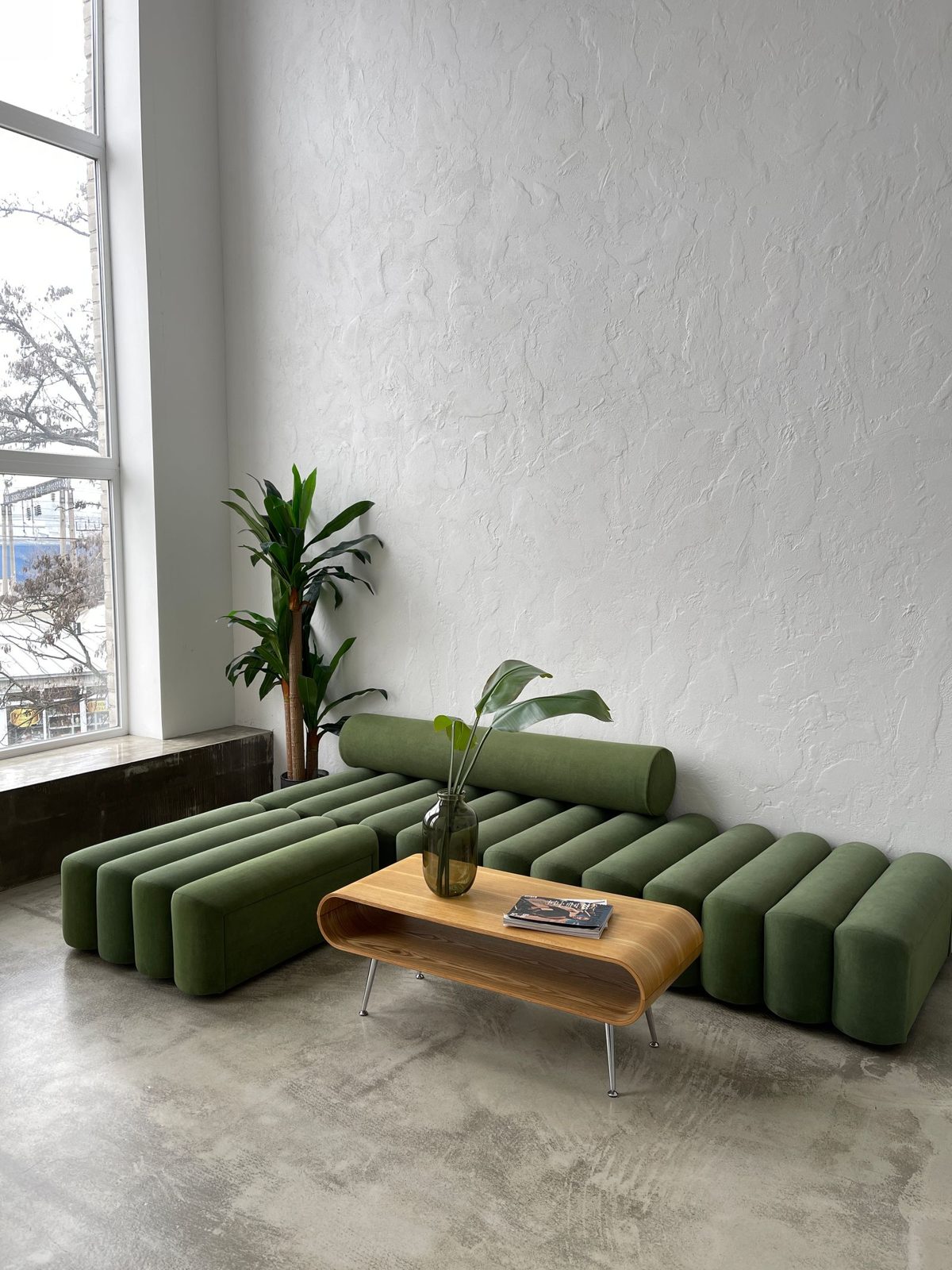
Small furniture is not always the answer to small rooms. Several little tables and chairs can create more visual clutter than one properly proportioned sofa and a useful side table. Examine each object’s depth, leg structure and silhouette. A piece that permits a view of the floor beneath it can feel lighter without becoming insubstantial.
Choose furniture for the activities that actually happen. A comfortable chair and a lamp may give a compact corner a complete purpose. A narrow console that holds nothing useful may simply occupy a route.
Leave a little clear space around the most important pieces. This allows their shape to register and gives the room a sense of intention. Furniture feels more architectural when its position relates to the openings and wall planes, rather than appearing wherever a gap happened to remain.
Bring light into the architecture
Lighting can define a wall, emphasise a recess or give a compact dining area its own atmosphere. Plan it alongside furniture, particularly where outlets and switches need to be located. A wall light may save table space, while a movable floor lamp can offer flexibility. Choose the solution according to the task and the room’s likely evolution.
Use concealed lighting carefully. It can clarify a shelf or cabinet detail, but it becomes less useful when every perimeter glows. Decide what the light is meant to reveal. Check reflections and glare from the positions where people sit, and use appropriately specified fittings for kitchens and other demanding locations.
If alterations involve walls, built-in electrical work or structural openings, have the relevant conditions assessed by qualified professionals before work begins. For a smaller decorating project, start with the reversible changes: rearrange, paint, improve curtains and give storage a clearer role. Architectural character often emerges when the home’s ordinary elements finally work in concert.
Frequently Asked Questions
What makes a small home feel architectural?
Clear sightlines, considered proportions and a coherent relationship between materials create architectural presence. Storage that resolves a recess or curtains that frame a window properly can make a strong contribution. The aim is to give the existing space more order, character and practical purpose.
Can I add architectural character without renovating?
Yes. Furniture placement, paint continuity, well-scaled art and improved curtains can change the way a room reads. Begin with circulation and the view from the entrance. A clear composition often provides more benefit than applied decorative detail, especially when the existing architecture is simple.
Should a small apartment always have white walls?
White is one option. Deeper colours can create intimacy, while pale tones can support a light-filled room. Test the paint against flooring and furnishings, including at night. The relationship between the room’s surfaces is more important than a rule about keeping every small space white.
Is built-in storage better than freestanding furniture?
Built-ins can resolve awkward dimensions and provide substantial storage, but they need careful planning. Freestanding pieces offer flexibility and may suit renters or changing needs. Choose according to the objects being stored, the wall’s proportions and the way the home is likely to be used over time.
How do I make open-plan rooms feel distinct?
Define activities through furniture placement, rugs and lighting. Keep circulation clear and maintain a related material palette across the whole view. A dining pendant or a seating group can establish a zone without a new partition. Test any divider against its effect on light, movement and useful space.
What to Read Next
For a more expressive compact palette, read Budget-Friendly Colour Trends to Transform Your Small Space.
To connect materials with the natural world, explore Biophilic Design: How to Bring Nature into Your Home.
For furniture chosen with a longer horizon, continue with Furniture That Lasts.

Leave a Reply