
The living rooms we remember rarely reveal their effort immediately. We notice that the conversation flows, that there is somewhere to put a cup and that the room looks as inviting in the evening as it did in daylight. Only later do we recognise the decisions behind that ease: the position of a chair, the reach of a lamp, the relationship between a rug and the furniture resting on it.
Good living room design begins with this ordinary experience. A room may have a modest budget or an extraordinary view, contemporary furniture or pieces collected over decades. Its success depends on whether those elements work together at the scale of daily life. The seven qualities below provide a way to assess that relationship before making the next purchase.
Think of them as questions to bring to your own room. Where does movement happen? What receives attention first? Which materials make the space comfortable? A living room becomes more accomplished when each answer supports the others, giving beautiful objects a setting in which their usefulness and character can be appreciated.
1. A layout that makes movement feel effortless
The plan is the room’s quiet foundation. Before arranging a sofa around a television or fireplace, trace the routes between doorways, windows and adjoining spaces. People should be able to cross the room without stepping through the centre of a conversation or squeezing behind a chair. A generous circulation route can make a modest room feel more composed than a larger one crowded with furniture.
Mark furniture footprints with tape and open every door that shares the space. Include the movement of drawers, reclining chairs and a curtain stack. The useful plan is the one that accommodates the house in operation. If a room also serves as a route to the garden, recognise that path instead of pretending the space is a self-contained sitting room.
Arrange seating around people
Turn chairs towards the group rather than leaving them squarely against the walls. In a long room, two related areas may work better than one stretched arrangement: a main sofa group and a smaller reading corner, for example. Their relationship can come through a shared textile colour or timber tone. The furniture should invite use without demanding that every seat face the same direction.
Consider who uses the room most often. Deep lounging seats may be appealing for a film, while an upright chair can be easier for conversation or getting up. Accommodating different kinds of comfort gives the room flexibility. A layout that works only when no one is seated is a display plan; a good living room also anticipates knees, elbows and cups.
2. Furniture whose scale belongs to the space
Scale is the relationship between an object and its setting. A sofa can be physically small yet visually heavy if its arms and base are bulky. A larger piece on visible legs may appear lighter. Assess height, depth and silhouette alongside the footprint, then consider how much of the surrounding floor and wall will remain visible.
The room needs different levels. A low sofa beside a tall cabinet and an upright lamp creates a more interesting composition than furniture that all ends at roughly the same height. These variations should still feel balanced. Position the taller pieces where they support the architecture, avoiding an unnecessary obstacle beside a window or a cabinet that seems to lean over the seating.
A coffee table deserves the same scrutiny. Test whether everyone can reach it and whether its edges leave comfortable circulation. Our guide to choosing a statement coffee table explores the relationship between form and proportion. An occasional table beside a chair may solve a problem more effectively than enlarging the central table.

3. A convincing foundation beneath the seating
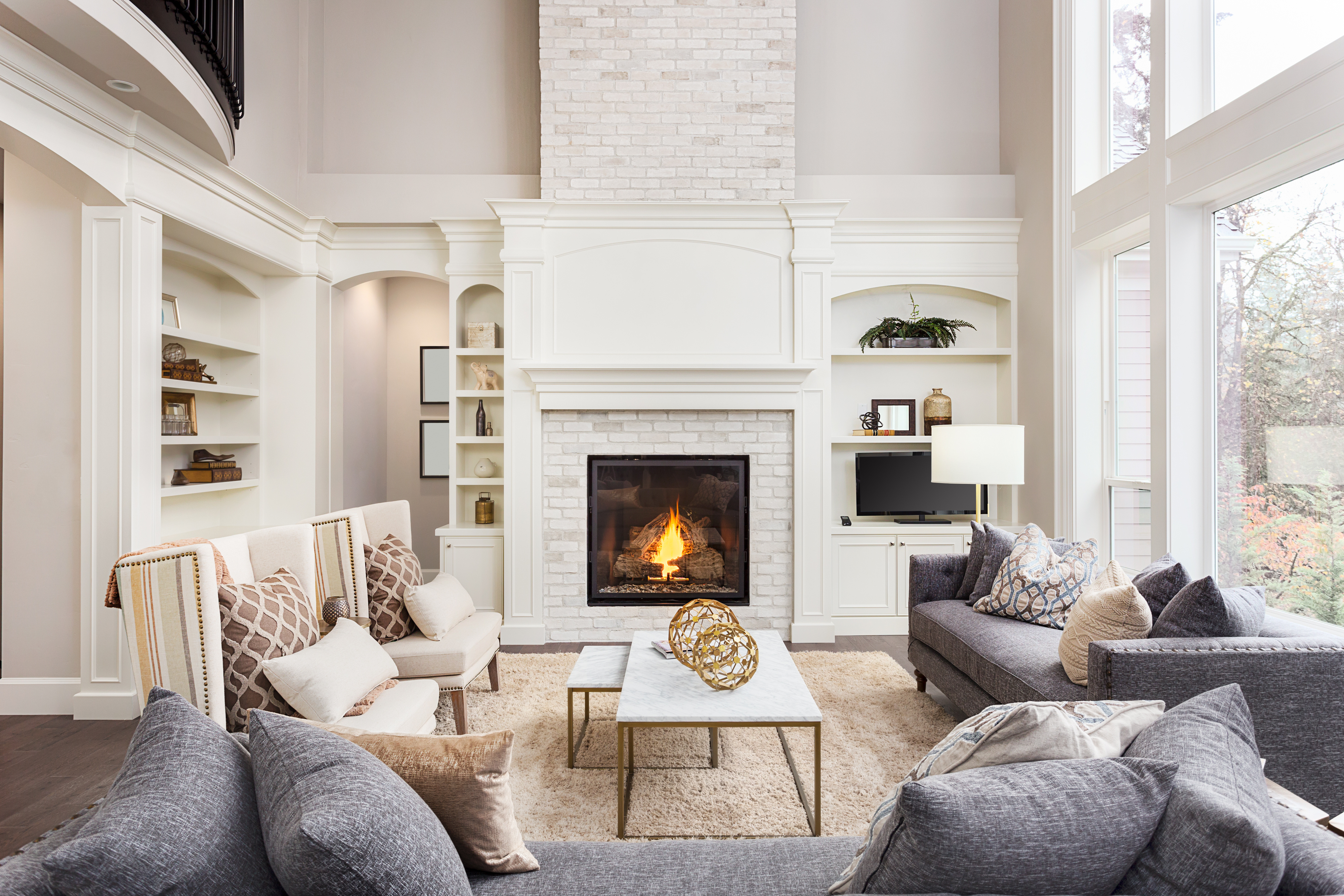
A rug establishes the seating area within the larger room. When it is too disconnected from the furniture, the pieces can seem scattered around it. When it relates to the seating footprints, it creates a coherent island of activity. Look at the actual arrangement before selecting a standard size; a rug that suits a sofa alone may be too narrow once two chairs join it.
Material should follow use. A soft pile may feel wonderful under bare feet, while a flatter weave can be easier to navigate around dining chairs or heavily used routes. Read the specific care guidance, particularly for a room shared with pets or young children. ELE Home’s tips on choosing a rug offer useful considerations for making the foundation both attractive and manageable.
The rug can also organise the palette. A faded pattern may contain the warm neutral of the walls, a deeper upholstery tone and one unexpected accent. It brings those colours together within a single surface. If the furniture is already strongly patterned, a more restrained rug may give the room welcome stillness. Consider the view at full room scale, where a small sample cannot show the pattern’s effect.
4. Lighting for both atmosphere and actual tasks
A living room needs light in the places where people spend time. The reader requires illumination at the chair, the sofa group benefits from softer surrounding light and a displayed object may need a small accent. Relying on a central ceiling fitting asks one source to do several different jobs. The resulting room can be bright enough yet uncomfortable to inhabit.
Plan from seated eye level. A bare bulb that appears elegant when you stand in the doorway may produce glare from the sofa. A lamp shade should direct useful light without exposing an unnecessarily bright source. Test the fitting in position wherever possible, including its reflection in windows and mirrors. ELE Home’s feature on creating lighting ambience provides a useful companion to this process.
Make the evening room as considered as the daytime room
Use controls that allow the atmosphere to change, checking that bulbs and dimmers are compatible. A softer evening setting should still permit safe movement around the furniture. Decide which lights you reach first when entering the room and whether their switches are convenient. The best arrangement does not require crossing a dark room to turn on several unrelated lamps.
Light can also reveal materials. A shaded source beside timber brings out its grain, while gentle illumination across a textured wall makes the surface more legible. Allow brighter and quieter areas to coexist. This gives the room depth after sunset and preserves the intimacy that a living room needs.

5. A palette with depth and a clear relationship to materials
A convincing palette is more than a list of colours. It includes the undertone of the floor, the warmth of timber, the sheen of metal and the texture of fabric. Begin with the largest fixed surface or the object you most want to keep. Allow it to guide the next choice, then test the relationship in the room’s own light.
Variation within a colour family can be particularly elegant. Oat, warm ivory and tobacco give a quiet room depth; olive can link timber furniture with a garden view. A stronger accent should have enough presence to register without being repeated on every small object. Let it return in a different form, perhaps through art, the edge of a rug or the lining of a lampshade.
Wood tones need not be identical. A darker side table can balance pale flooring when another small element repeats its depth. Our guide to mixing wood tones can help make inherited pieces feel more connected. The aim is a room whose materials seem comfortable in one another’s company, with enough variation to hold interest over time.
6. Textiles that make comfort visible
Textiles soften the living room’s sound, edges and physical experience. Curtains frame the light, upholstery makes the furniture inviting and cushions offer a modest opportunity for pattern. Their contribution is strongest when chosen together. A crisp linen curtain, a dense woven sofa fabric and a wool rug each provide a different texture without demanding a louder palette.
Keep the number of cushions related to the seating. A chair should remain available to sit in, and a sofa should not require a clearing exercise every evening. Mix scale and texture deliberately: one larger patterned cushion can sit beside a smaller plain one if their tones relate. ELE Home’s guide to mixing throw pillows offers useful ideas for refining the arrangement.
Consider maintenance before selecting an entire room of delicate surfaces. Ask about fabric performance, cleaning methods and removable covers. If the household likes eating on the sofa or the dog has a favourite seat, acknowledge that reality in the specification. Practical fabrics can still be beautiful, and a room designed for its occupants usually feels more generous.
Curtains deserve attention to both scale and operation. Allow enough fabric for a pleasing fall, decide where the stack will sit and check whether it obstructs ventilation, heating or access. A pair that seems mean against a large window can make the whole room feel unfinished. The treatment should belong to the opening and the height of the wall around it.

7. Storage, personality and some room to breathe
The most successful living rooms know what to conceal and what to display. Cables, games, paperwork and media equipment need practical places. Books, art and collected objects deserve a visible role. A cabinet that combines closed storage with a few open surfaces can accommodate both, giving the room a calmer base without removing its character.
Display objects in groups that can be understood from across the room. A few pieces with different heights often have more presence than many small items spaced evenly along a shelf. Let the wall or shelf remain visible between them. Our guide to open shelving is useful for balancing the practical collection with the visual composition.
Personality comes from specificity. A print chosen because you love it, a useful bowl inherited from family or books that reflect your interests contribute more than accessories bought merely to complete a colour scheme. They can coexist with contemporary furniture when the arrangement has enough order. The room’s history need not match the date of its sofa.
Leave space around a focal point so it can be appreciated. That may mean a quiet wall beside a painting or a clear section of floor around an expressive chair. Empty space is part of the composition. It helps the furniture and possessions feel selected rather than compressed into every available gap.
Bring the seven elements together before buying more
Walk through the room at different times of day and note the moments that feel awkward. The missing side table, the unlit chair and the cramped route often reveal more than a photograph does. Photograph the space too, particularly from its entrance, to judge the balance of tall and low objects. Use both views: one tests experience, the other clarifies composition.
Prioritise the change that resolves several issues at once. A better-sized rug can improve the furniture’s relationship and introduce colour. A cabinet may hide everyday clutter while creating a surface for a useful lamp. A new chair may add another kind of comfort and balance a bulky sofa. Good purchases answer more than one decorative question.
Finally, give the room time. Move furniture before replacing it and remove a few accessories before adding new ones. A well-designed living room does not need to look finished in a single shopping trip. Its lasting quality comes from the way the plan, materials, lighting and possessions support a comfortable life together.
Frequently Asked Questions
What is the most important part of living room design?
Start with layout and circulation. Furniture should accommodate the room’s routes and the way people sit, talk and relax. A beautiful palette cannot correct an awkward plan. Once the main arrangement works, scale, lighting and textiles can make it more comfortable and visually coherent.
How do I choose the right living room rug size?
Mark the seating arrangement and test how the rug connects the sofa and chairs. Avoid a rug that seems isolated in the middle of the group. The appropriate size depends on the actual layout and the floor space around it, so compare footprints before choosing a standard dimension.
How many lights does a living room need?
There is no fixed number for every room. Provide light for the tasks and seating areas you use, then add softer illumination to create depth. Test glare from the sofa and reading chair. Convenient switches and compatible controls matter as much as the number of fittings.
Should all my living room furniture match?
Furniture can share a colour temperature or material relationship while differing in shape and age. A mixture often gives the room more character. Check proportion and comfort first, then distribute the finishes so each piece feels connected. Matching every item is one approach, rather than a requirement.
How can I improve a living room on a limited budget?
Rearrange the seating, remove unnecessary small objects and address the most obvious practical gap. A useful lamp, a better curtain treatment or a correctly sized rug may have greater impact than several accessories. Keep sound furniture and direct the budget towards changes that improve daily use.
What to Read Next
For compact-room ideas, read How to Make a Small Living Room Look Expensive.
To refine the windows, explore How to Hang Sheer Curtains for a Chic, Classic Look.
For a longer-term approach to furnishing, continue with Furniture That Lasts.


Leave a Reply