
Throw pillows are one of the easiest and most affordable ways to refresh your living room or bedroom. When styled well, they can instantly make your space feel more polished, inviting, and cohesive. But getting the balance right can be tricky, too many patterns or colours can make your space feel chaotic, while too few can make it look flat. So how do interior designers get it just right? Here’s everything you need to know about mixing and matching throw pillows like a pro.
Start with a Base Colour Palette
A cohesive colour palette is the foundation of good pillow styling. Interior designers typically recommend sticking to two to three main colours that complement the rest of your space. Look to your existing rug, artwork, or furniture for colour cues. Neutrals like white, beige, grey, or navy create a versatile base, and you can layer in pops of colour to suit the season or your personal style. Having a consistent colour story helps tie different patterns and textures together seamlessly.

Mix Different Patterns, But Keep Balance
The secret to mixing patterns is variety without clutter. Designers often use the “rule of three”, one solid colour pillow, one simple pattern (like stripes or dots), and one bold, more complex pattern (like florals or geometric prints). Varying the scale of patterns is key: if you have a large-scale floral print, balance it with a smaller, subtle print so they don’t compete.
Play with Textures for Added Depth
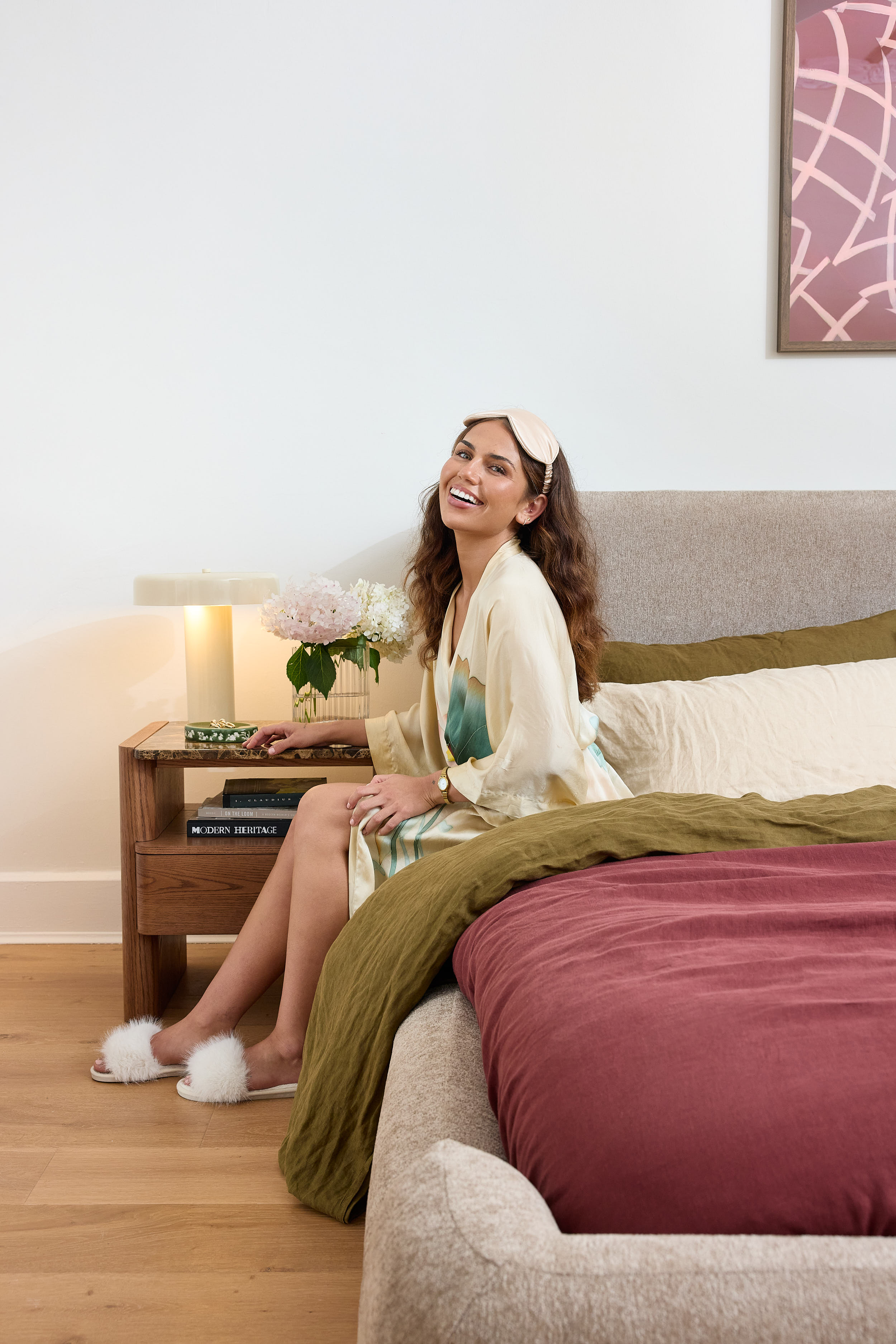
Texture is an often-overlooked element that adds warmth and dimension to your space. Even with a neutral colour scheme, mixing fabrics like linen, velvet, knits, or faux fur keeps the arrangement visually interesting. For a cosy, layered look, combine smooth materials with nubbly, plush textures. This adds depth and prevents your pillow arrangement from feeling flat or one-dimensional.
Vary Sizes and Shapes
To achieve a designer-worthy look, avoid using only one pillow size. Start with two larger pillows (20″x20″ or 22″x22″) on the ends of your sofa or bed, layer in slightly smaller square pillows (18″x18″), and finish with a lumbar pillow or round cushion in the centre for variety. The mix of shapes and sizes creates a more relaxed and curated feel rather than a stiff, overly symmetrical arrangement.
Consider Odd Numbers for a Natural Look
Interior designers often follow the odd-number rule when styling throw pillows. Arranging three or five pillows on a sofa or two to three on a bed tends to look more natural and visually appealing than even numbers, which can feel too formal or rigid. Odd numbers create a sense of balance without strict symmetry, making your space feel effortlessly put-together.

Don’t Be Afraid to Change with the Seasons
One of the best parts of styling with throw pillows is how easy it is to refresh your space for different seasons. Lighter fabrics like linen and cotton in soft hues work well for spring and summer, while richer textures like velvet in deeper tones are perfect for autumn and winter. Swapping out just a few covers can instantly give your space a fresh, updated feel without major redecorating.

Mixing and matching throw pillows like an interior designer is all about playing with colour, pattern, texture, and proportion. By sticking to a cohesive colour palette, balancing prints, layering textures, and varying sizes, you can easily create a space that feels stylish, inviting, and uniquely yours. It’s a small detail that makes a big impact—so have fun with it and let your personal style shine through.


Leave a Reply