
This is an edited extract from Dream Gardens by Michael McCoy published by Hardie Grant Books

Introduction by Michael Mc Coy
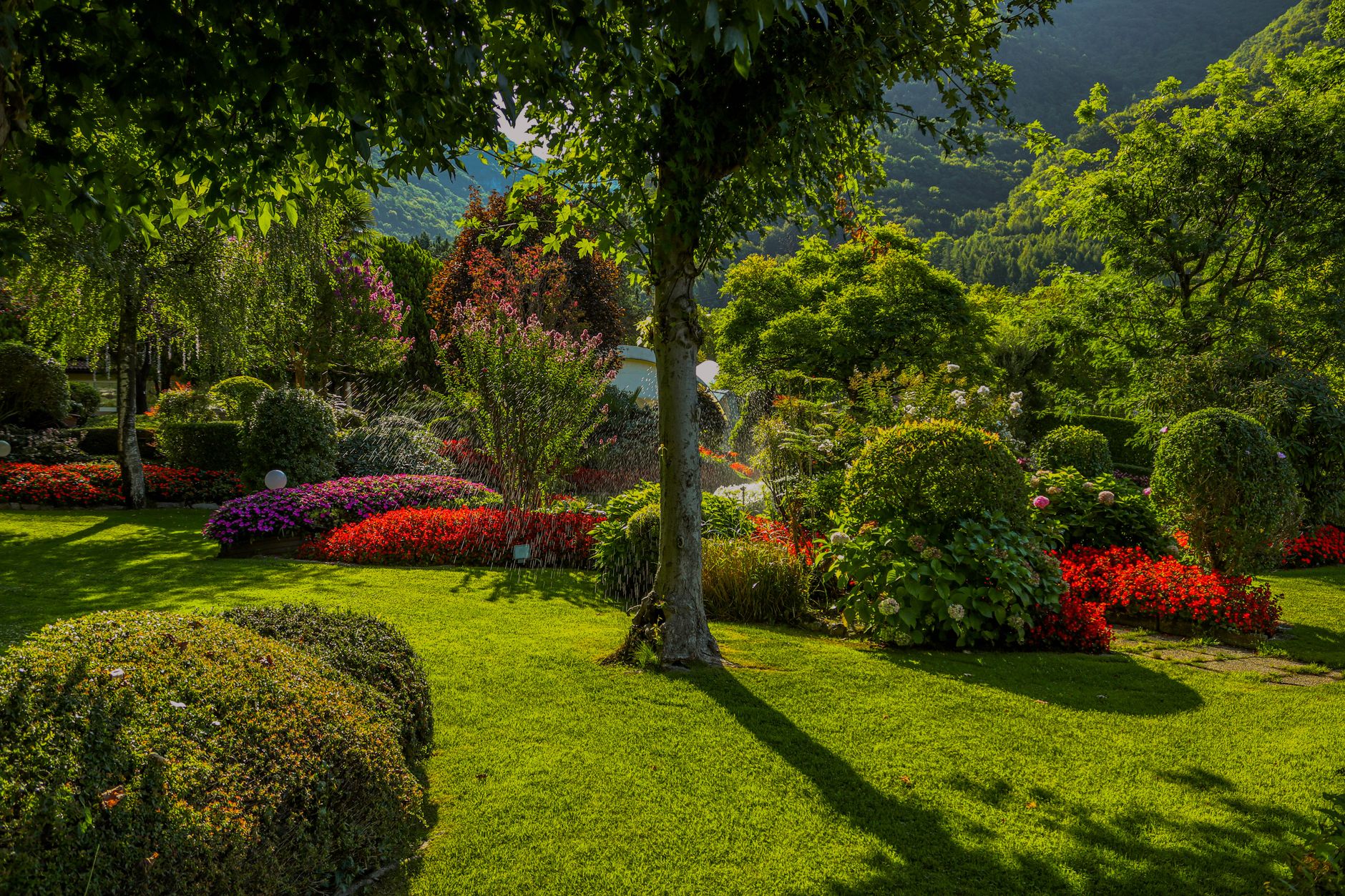
I’m totally obsessed by the desire to understand how gardens work and how they make me feel. No matter where I am in the world visiting gardens – no matter the climate, culture or the consequent style of garden – I’m forever trying to comprehend (and even better, articulate, for I’m usually with a group) what it is about the design and/or the planting that is making me feel introspective or expansive, quietened or stimulated, cosily contained or riskily and excitingly exposed.

It’s not that I want to disempower or demystify gardens. For I love that sense of joy or wonder that can creep up on you in a garden – it’s one of my favourite things about them – and I don’t want to undermine it. I just need to understand more of how gardens work so I can create or replicate similar experiences in gardens of my own design or creation.
Hosting ABC TV’s Dream Gardens has been one of the greatest privileges of my working life. It has given me access to the wildly diverse work of some of Australia’s greatest garden designers, with a chance to see the site before any work begins, then to revisit several times during the construction of the garden.
I’ve had the opportunity to talk to the designers about their approach at each point in the process and discover how they’re planning to bring the garden owner’s dreams to life.

With the exception of the work of celebrated Australian garden designer Edna Walling, who created her own ‘village’ in order to control both the architecture and the gardens, every creation of a garden designer is what a painter would call a ‘commission’ – one ordered, and to some extent pre-envisaged, by the owner. Indeed, the ‘canvas’ belongs to the client, and they’re usually there to watch, observe (and often evaluate and criticise) every brushstroke as it emerges. Consequently, one of the most valid ways to judge the success of any garden design is how well it matches the needs or desires of its owner, regardless of how photogenic or televisual it is. Of course, if the designer is to have any professional future, it also needs to be magically beautiful. That’s quite a challenge – and one for which the designers on ABC TV’s Dream Gardens were more than a match.

Another way of evaluating a garden is how well it engages with its site; how effectively it amplifies the natural beauties or advantages provided by it, and how well it minimises the evidence of the physical or visual challenges that all sites present. These two inputs are so multifaceted and so intricately intertwined that there’s no chance of any two ‘canvasses’ being identical, and therefore of no two gardens being exactly alike. Amongst the pages of this book are gardens built on slopes initially considered too steep for any of the machinery required for their construction and others so low lying, and with such a high water table, that swimming pool shells in the vicinity had been known to float up out of the ground. There are gardens so small that a car-stacker was installed and planted over in order to appropriate every square centimetre of available space, and others with such a huge outlook that they had to be treated primarily as a visual plinth for the grand view beyond. There are gardens made on thin, starved, sandy soils and others on poorly-drained, puggy clay. But time and time again, I was reminded that no matter how great the physical challenge, garden design is never a purely problem-solving exercise. Every art form confronts challenges of execution and it’s the larger creative drive and vision that keeps these hurdles in perspective.

Each of the following chapters teases out one of the projects featured on Dream Gardens, starting with the hopes and longings of both the owner and the designer before any action began, to the challenges of construction along the way and finally to the success of the end result, which is also richly and comprehensively illustrated. Each chapter also contains the transcript of an interview with the designer of that garden and a reflection on an important aspect of design that their garden illustrates particularly well. All the gardens are still young; some still in their infancy. But in one sense they’re older than their years, as all gardens are longed-for and conjured up in the heart and mind well before they’re executed. That slow gestation is necessary to all good gardens and it is my sincere wish that this book facilitates that process for you, the reader.
So come and dream gardens with me.

For more information on Michael and where to buy his book, Dream Gardens, visit @michaelmccoygardens
First printed in ele HOME Magazine Issue 9
Want more? Click here for Garden Glory: When high fashion meets horticulture!




Leave a Reply